
For parents
The rights of the child in Islam

In Islam, a child has rights: to be treated fairly, to be cared for, and to be taught what they need to know. The Prophet ﷺ told parents to be just to their children, and warned that neglecting those in your care is a serious matter.
“Rights” can sound like a legal word. Here it simply means what a child is owed by the people who love them. This page looks at three of them, in words you can share at the dinner table.

The right to fair treatment
An-Nu’man’s father wanted to give him a gift and asked the Prophet ﷺ to witness it. The Prophet ﷺ asked if he had given the same to all his sons. He said no.
The Prophet ﷺ told him to be afraid of Allah and be just to his children. The father took the gift back. Even a loving gift must be fair.
Fairness does not need to be perfect maths. It means a child never feels they matter less than their brother or sister.
From the hadith
“Be afraid of Allah, and be just to your children.” His father took back the gift.

The right to be cared for
A child cannot feed, clothe or protect themselves. The Prophet ﷺ made clear that looking after those who depend on you is a duty, not a favour.
This covers the body and the heart. Food, a safe bed and also time, attention and love.
From the hadith
It is sufficient sin for a man that he neglects those he is responsible for.

The right to be taught
Every parent is a guardian over their family and will be asked about it. Part of what a child is owed is knowledge of who made them and how to live well.
If we give our children shoes, school fees and good food, then giving them their deen is part of the same care.
Seen this way, a lesson in how to pray is as much a part of a child’s care as a meal. Both are things we owe to them.
From the hadith
All of you are guardians and responsible for your wards... a man is a guardian of his family and is responsible for them; a woman is a guardian of her husband’s house and children and is responsible for them.

Rights go both ways
A child also has duties as they grow, such as kindness to parents. But a young child cannot do their part until we have done ours.
When a child feels treated fairly and loved, respect tends to follow by itself.
 A moment you may know
Imran and the two bags
Ayah (father) comes home from a trip to JB with a bag of sweets for Imran, ten, and a small toy for his sister Maryam, six.
Maryam looks at the toy, then at the sweets, and goes quiet.
Ayah notices. He thinks of the story of An-Nu’man and says, “Come, let us share everything.”
Maryam smiles. Imran gives her half without being asked, because he saw that Ayah wanted it to be fair.
Later he tells Mama, “It is easier to be fair when I remember that Allah is watching, and that they are both His gift.”
What a good result looks like
- At 12, your child feels they are treated fairly, even when they are not treated the same.
- They know they will be listened to.
- At 17, they trust home as a safe place to ask questions.
- They treat their own brothers and sisters the way you treated them.
Where your child gets this
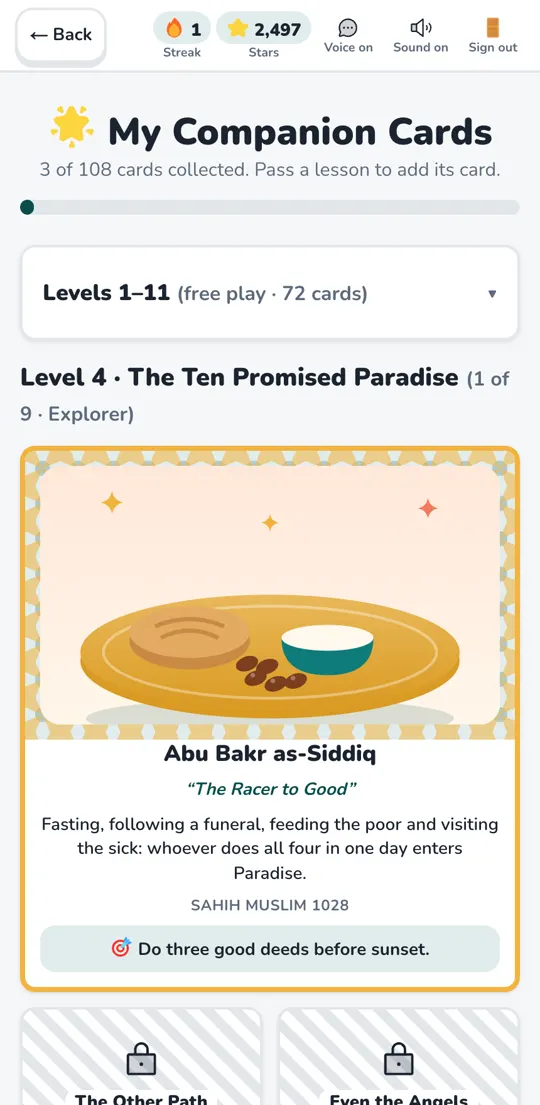
Giving a child their deen is one of their rights, and it should be easy to do. The madrasah is free, with no adverts, and it works in the browser. Every child in the family can start at their own level after a short entry exam.

Give your child this gift
The Sunnah School is a free online madrasah for children aged 6 to 17. No adverts, nothing to pay, and nothing to install.
Questions parents ask
Does fair mean exactly the same for every child?
Not always. Children have different needs. The hadith teaches that we must not favour one child unfairly without a real reason.
Is teaching Islam really a right of the child?
Parents are guardians who will be asked about those in their care. Teaching a child their deen is part of that care.
Know a parent who would like this? Share it:

