
For parents
Teenagers: why what you build now matters at 15

The teenage years are full of questions, friends and pressure. A child who already knows Allah, prays and has someone to talk to meets those years with a steady footing. The Qur’an praises young people who believed in their Lord, and the Prophet ﷺ spoke of the young person who grew up worshipping Allah.
Parents of younger children often hear, “Just wait until they are teenagers.” It need not be a scary time. What a parent builds at 8 or 10 becomes the ground a teenager stands on at 15. This page is about why that ground is worth building.

Young people can be strong in faith
The Qur’an tells the story of the youths of the cave, young people who believed in their Lord. Allah says He increased them in guidance.
It shows that teenagers are not a problem to wait out. They can be the people who lead in faith.
From the Qur’an
They were young people who believed in their Lord, and We increased them in guidance.

A great honour for the young
The Prophet ﷺ named seven people whom Allah will shade on the Day when there is no shade but His. One of them is a young person who grew up worshipping Allah.
Parents can tell their teenager this with pride: Allah values the young who keep their deen when so much else pulls at them.
From the hadith
Seven whom Allah will shade on the Day when there is no shade but His, including “a young person who grew up worshipping Allah”.

Words learned young stay for life
Ibn Abbas was only a boy when the Prophet ﷺ taught him: be mindful of Allah and He will protect you. He carried those words for the rest of his life.
What your child learns now, they will remember at 15 when life gets loud.
From the hadith
“O boy! I will teach you some words: Be mindful of Allah and He will protect you...”
Teens need to be asked, not told
A teenager wants to think for themselves. That is healthy. A teen who has already learned the basics can then ask real questions and find real answers.
A good course gives them room to give their own answer, not only repeat one.
Teenagers also need respect. If we listen when they ask, “Why?”, they are more likely to keep asking us instead of someone else.

Teens need a safe place to wonder
At fifteen, a child may ask hard questions: why this rule, why that practice. It is not a sign of weakness. It is a sign of a mind waking up.
A teen who has been taught kindly will feel safe to bring those questions home. A parent who answers calmly, or says “Let us find out together,” keeps the door open.
 A moment you may know
Zara at fifteen
Zara is fifteen. Her group chat is busy and her exams are close.
On Thursday night a friend asks her, “Why do you still pray five times? Isn’t it too much?”
Zara pauses. She remembers what she learned at ten about why prayer matters. She says, “It is the one part of my day that is just mine.”
Her friend is quiet. Then she says, “Can you show me how you do it?”
What a good result looks like
- At 15, your teenager still prays, even when tired and busy.
- They have answers when friends ask about their faith.
- They come to you with hard questions, and you can talk calmly.
- At 17, their faith is their own.
Where your child gets this
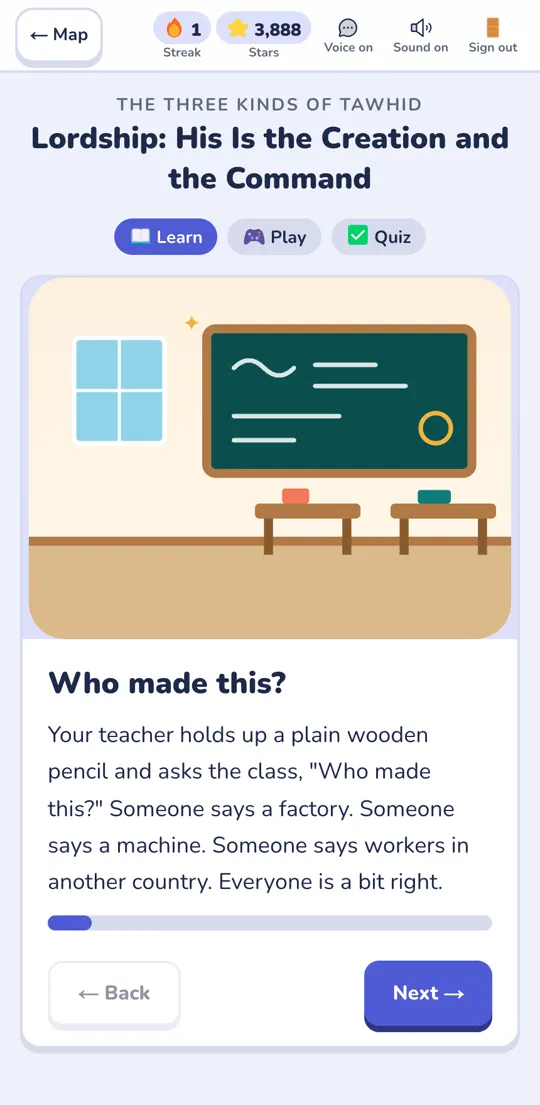
Older children join the same madrasah at their own level after a short entry exam. Teens get “Think & Share” questions that ask for their own answer, and the Growing Up subject teaches puberty gently. Skip-ahead tests let those who already read move on faster. It is free.

Give your child this gift
The Sunnah School is a free online madrasah for children aged 6 to 17. No adverts, nothing to pay, and nothing to install.
Questions parents ask
My teen is 14 and has not started. Is it too late?
No. Older children usually move faster, and the entry exam places them at the right level.
Will my teen accept an online course?
Many teens like to learn on their own and at their own pace. The questions ask for their own thoughts, which they often welcome.
Know a parent who would like this? Share it:


